
The Closed Door
A hidden illness in the wellness world


There is an invisible but pervasive illness in the wellness world. I say this as someone who works within it. As someone whose livelihood, community, and daily work are shaped by it. Which makes it harder for me to name it .
Recently, something was brought to my attention about a trainee that I mentor. She had been invited to teach at another studio. When she asked my permission to accept the offer, I said yes without hesitation. Not out of generosity, but because I am clear about my role. My responsibility is not to limit her to my own business interests. It is to help her become a better teacher.
So she accepted the opportunity. She showed up, and did the work. And then she was told that she was not allowed to share with her students any opportunities to continue studying with her elsewhere. Not even if those opportunities would deepen their practice. It is a small instruction. Easy to justify, common even. And yet, it reveals something much larger.
We speak endlessly about freedom, about embodiment, about healing. But when it comes to our own structures, we often default to control. We call it professionalism, maintaining boundaries, protecting our businesses. But if we are honest, it is something closer to fear. A fear of losing clients, or losing relevance. A fear that if people are exposed to more, they might choose differently.
And so we limit the teacher. We ask her to shrink her reach, to fragment her own offering. To pretend that what exists beyond a single room does not exist at all.
It is particularly unsettling because this pattern is so often upheld by women. Women who speak about empowerment. Women who lead spaces devoted to healing. Women who, in other contexts, would name this dynamic immediately for what it is. And yet here, it persists. Perhaps because we have been taught over time, that there is only so much space available to us. That if another woman grows, the rest of us lose something.
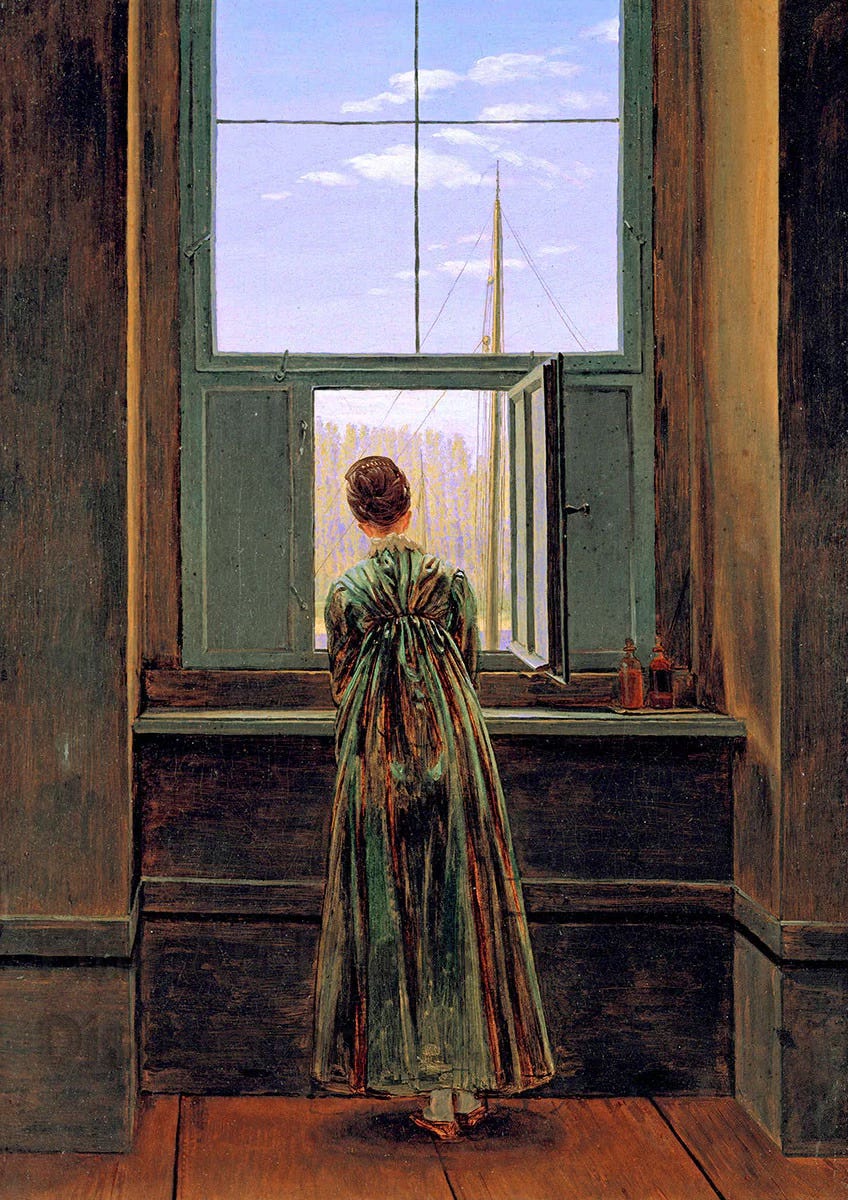
There is also a deeper irony. In addition to Pilates I am also a yoga teacher. Yoga in particular is a practice rooted in a culture that is not our own, and it is often taught in the language of openness and liberation. And yet, in the hands of Western business models, it becomes something to control. Access is limited. Language is managed. Growth is discouraged if it happens outside the structure we have built. We borrow a philosophy of expansion, and then enforce contraction. The contradiction is difficult to ignore.
The body does not thrive in confinement. It does not evolve through repetition alone. It needs variation, challenge, new environments, new teachers, new ways of being understood.
A teacher is no different. To restrict her movement is to restrict her language. To restrict her language is to limit what she can offer. And ultimately, it is the student who receives something smaller than what is possible.
I do not believe in holding teachers this way. If a teacher I mentor is invited into another space, I want her to go. I want her to see more, learn more, to fail and refine and return with a deeper understanding of her own work. Because that is how a teacher becomes someone worth studying with. Not through containment, but through experience.
There is a difference between building something meaningful and trying to possess it. If the work is strong, if the teaching is real, there is no need to close the door. People will stay because they are nourished. And they will leave when they need something else, but often they will return with a deeper understanding of why they came in the first place.
This is not a loss. This is the work.
And as a community, we have a role in this. Where you choose to practice matters. What you support, and what you are willing to accept, shapes the culture around you.
The work, at its best, opens something. It creates space where there was none before, a widening, a sense that there is more to explore, not less. If a space asks you to stay small, to remain contained, to be loyal at the expense of your own growth, it is worth asking why.
And it is worth asking more of the places you trust.
In the places you practice, do you feel expanded or contained? I would love to hear what you have experienced in the comments. I am listening.
I’ve rarely, if ever, heard this articulated. Thank you. I couldn’t agree more. Such an important piece in so many ways. Beautifully written.
Beautifully said.