
What Carries Us
Grief, family, flu, and the fierce mercy of art

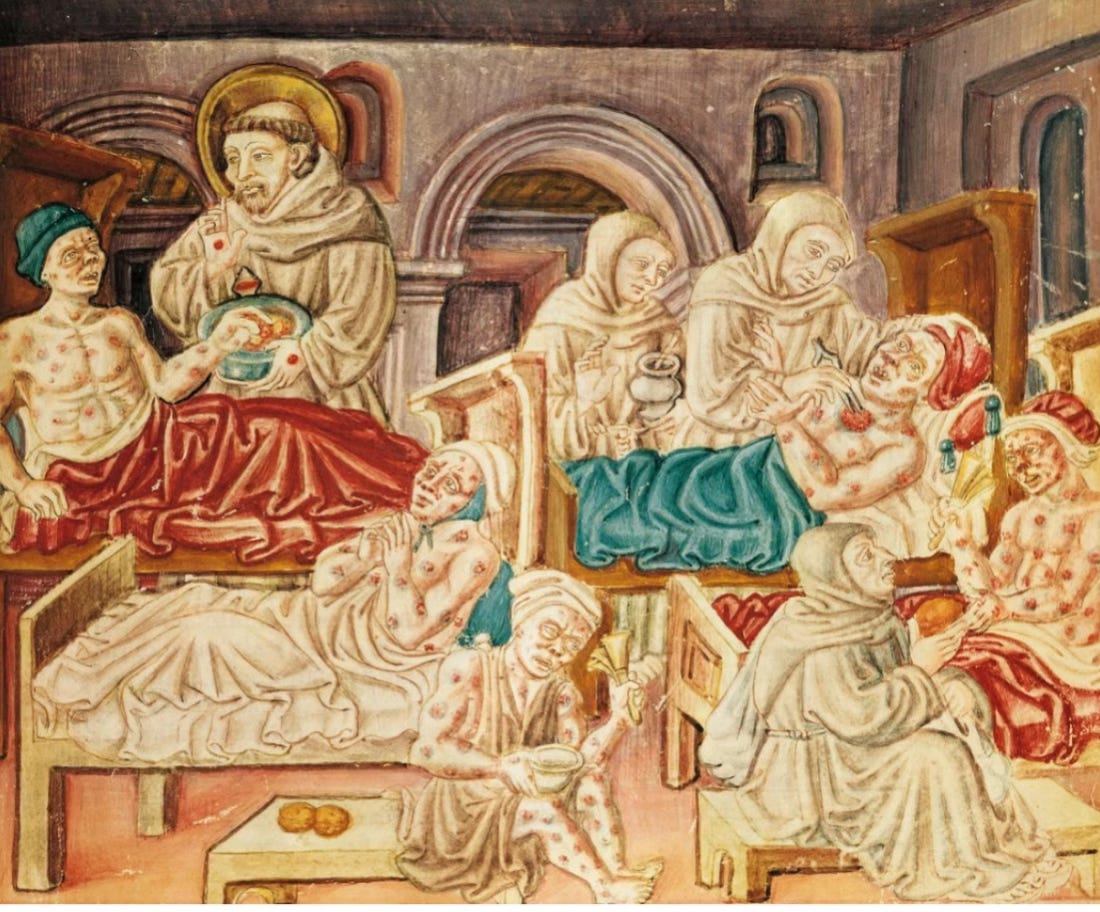
Readers, I vanished. The flu got me. And not the polite version you treat with tea and moral superiority. This one had personality. It had opinions. It sat me down and said, “No, you will not be doing anything this week.”
I like to think of myself as sturdy, and it flattened me anyway. There were days when walking from the bed to the kitchen felt like an expedition requiring provisions and a support team.
I will not dwell on the flu now, but I want to be honest that it got me, and it got me good. I fell hard, and I am working my way back.
For those of you who like practical things, paid subscribers will receive my flu guide, The Architecture of Getting Well, later this week. I sincerely hope you will never need it. But if life delivers you the particular opera that just sang through my body, it will be there waiting, like broth on the stove.
But right before the flu arrived, I was already carrying something far heavier.
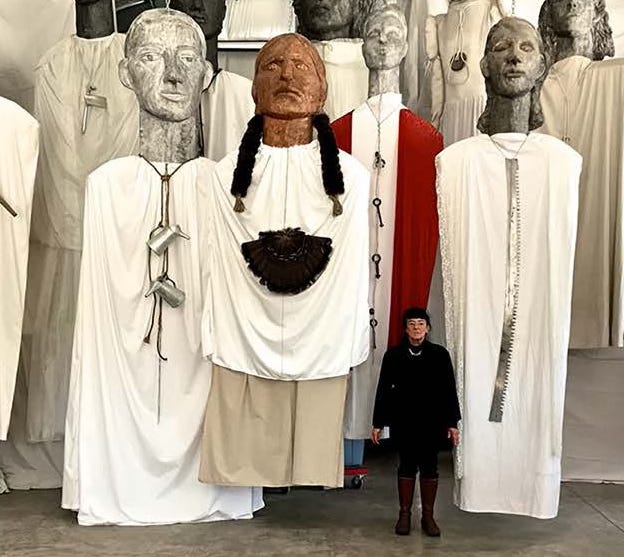
My friend, the artist Deborah Masters died on December 6th. Deborah had become very ill and disabled in the last years of her life. She lived with more than most of us will ever be asked to endure. But I do not want to write about her dying. I want to write about her life. And maybe even more than that, I want to write about her art, and about the size of her spirit, which somehow felt larger than even her sprawling installation, Walking New York, in Terminal 4 of JFK International Airport.
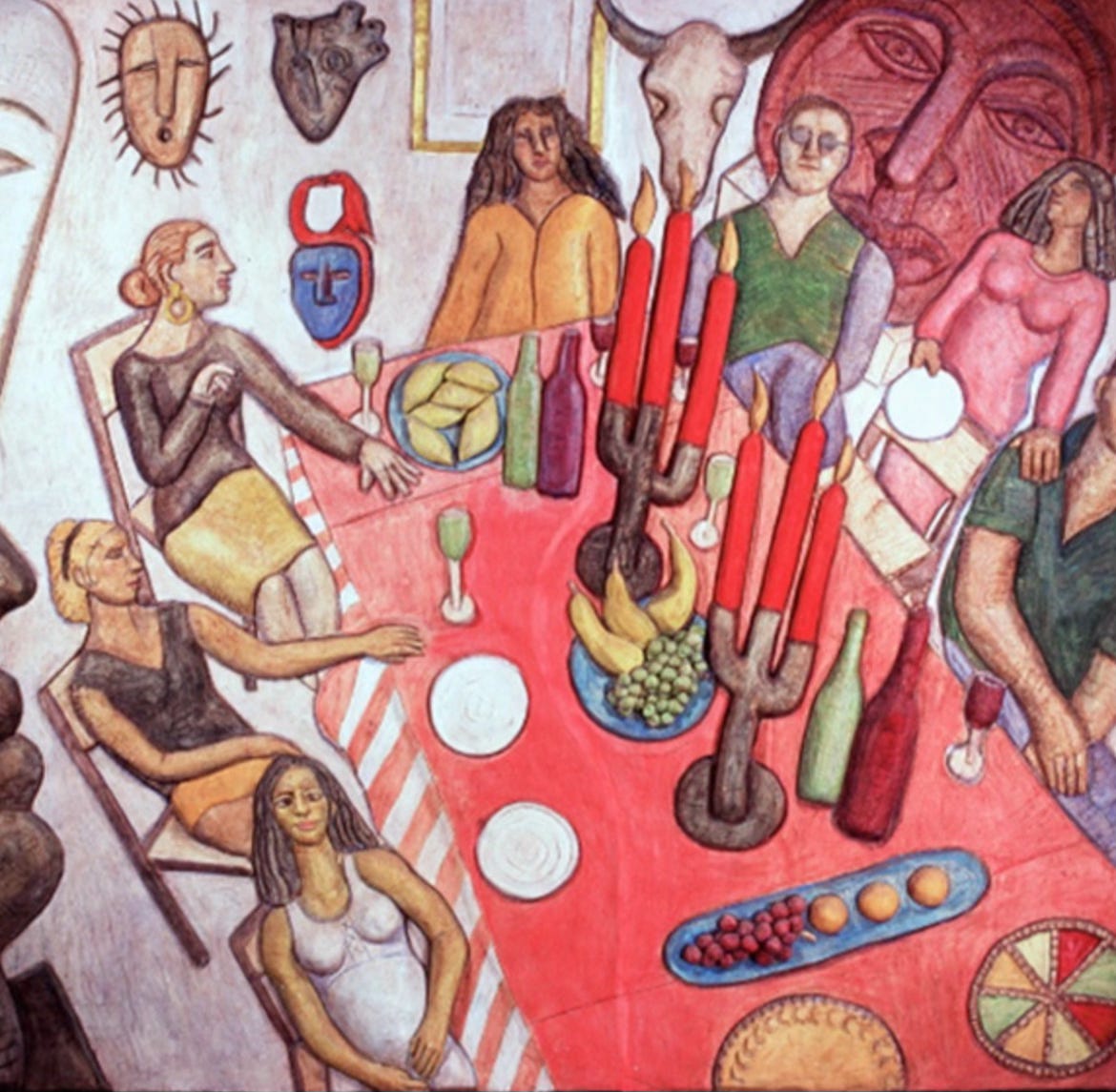
I met Deborah in my early twenties, at a party in the loft she shared with her partner Geoff in DUMBO, Brooklyn. She was exactly what my younger self imagined an artist should be: funny, fierce, original, beautifully odd in all the right ways. Great shoes, great laugh, great appetite for life.
I used to sometimes joke that I followed Deborah around the world. It was only half a joke. When she moved to Williamsburg to begin the now-legendary lofts at 475 Kent Street, my husband and I eventually found our way to Greenpoint. We raised our son while Deborah filled her vast studio with clay and plaster and the kinds of figures that do not merely occupy space, but alter it by existing. Later, we had a home near hers in Italy. Later still, when we moved upstate to Hudson, we became neighbors once again. Our lives kept finding each other, as if proximity were part of the friendship.
Deborah did not make small work. She did not make tentative work. She did not ask permission. Her figures were monumental, yet never cold, filled with sorrow and tenderness and a rough, unapologetic humanity. She believed in art the way some people believe in religion, as something you give your life to, not because it is easy or rewarded, but because there is no other way to live and still be yourself.
In the weeks after she died, I found myself thinking about art in that way again. Not as a career or a product, but as a life force. As the thing that lets us hold the unbearable and not turn to stone.
The timing was strange. I was still weak from the flu. My body was exhausted, my thoughts unfocused, my nerves thin. Yet what began to heal me was not only time, although time helped. It was not only supplements or rest, though those mattered too. What truly began to lift me was time with my family, simply being together in the ordinary ways, eating together at the table, watching movies, making tea. The small human rituals that remind the body it is not alone.
And it was art.
I went to see Hamnet, the film based on Maggie O’Farrell’s novel, which I loved. I thought I knew what I was walking into (spoiler alert!): A story about Shakespeare’s son who dies too young. A story about grief and genius and the unbearable emptiness of one child gone. But what the film captures is something deeper and quieter. It shows how art is carved from loss, and also how it does not erase the loss it emerges from. The tragedy does not become beautiful because a masterpiece is born out of it. The grief is not justified. It is simply transfigured into form, into language, into something that can be shared.
Hamnet does not tell us that art heals by fixing anything. It suggests instead that art heals by giving the pain a shape large enough to hold it.
Deborah knew this. She lived it. Her art did not look away from suffering. She sculpted the weight of the city, the weight of history, the weight of being a person in a body that will not last. And yet, being with her work, you did not feel crushed. You felt seen. You felt less alone in the strangeness and beauty of being alive.
As I lay in bed with the flu, sweating through fever dreams, I kept circling these questions. What heals us. What steadies us when someone we love leaves the world? What allows us to keep going when we are tired in our bones?
The answers are not complicated.
To be with the people I love.
To remember the ones who shaped me.
To bear witness to art made honestly, even in the face of disability, misunderstanding, poverty, age, illness, and grief.
To sit inside a story and feel my heart move, even if it hurts.
I will not say Deborah was fearless because she was never afraid. She was fearless because fear did not stop her. Her commitment to her work was absolute.
This is what I am carrying forward. This is what I want my children to know, and my students, and you who are reading.
Art does not save us from loss.
It does not prevent illness.
It does not make death less real.
But it keeps us human inside of all of it.
I am still tired. I am still sad. But I am also grateful. Grateful that Deborah lived the life she lived. Grateful that she gave herself to her work so completely. Grateful that art exists in this world.
And I am grateful for you. For being here. For reading. For staying with me through absence and return. I am finding my way back, step by step. With family. With time. With art.
And with Deborah’s big, blazing spirit, still very much alive in the room.
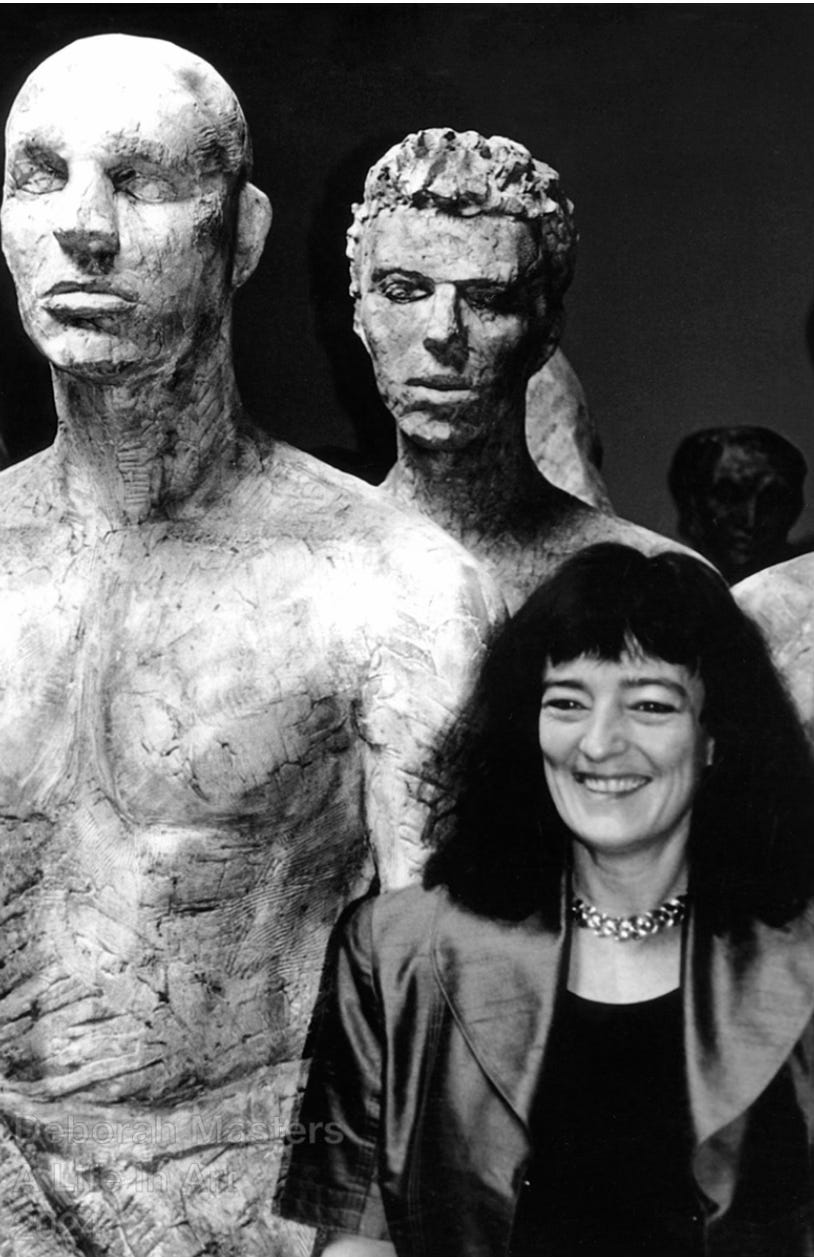
If you would like to see more of Deborah’s art, her website is here: Deborah Masters
Your writing honors her life.
A lovely remembrance of Deb.V.